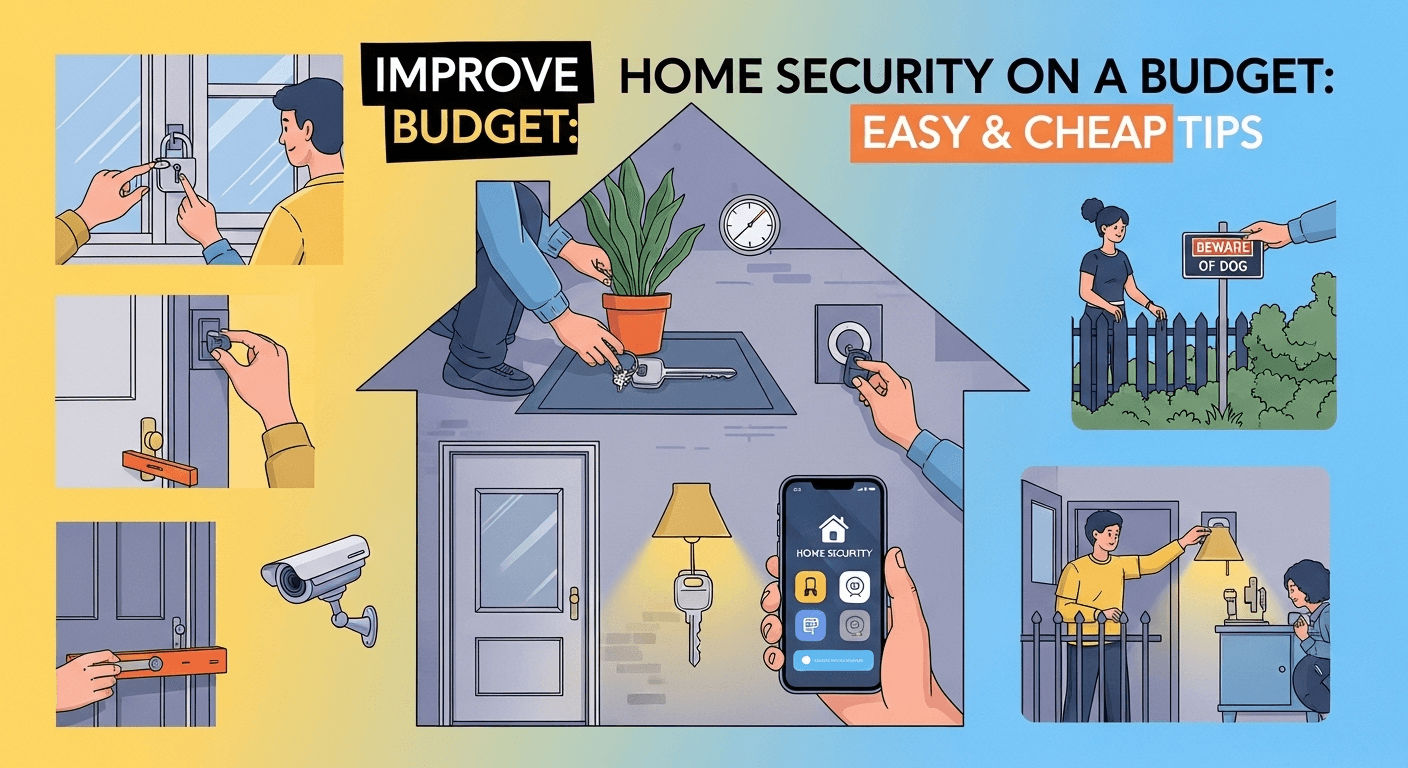
Feeling secure in your own home is a fundamental need, not a luxury. However, the high price tags on advanced security systems and professional services can make robust protection feel out of reach for many. The good news is that you don't need to break the bank to significantly bolster your home's defenses. There are numerous effective, affordable, and often simple strategies you can implement right away. This guide is designed to walk you through exactly how to improve home security on a budget, proving that a safe and secure home is achievable for everyone, regardless of their financial situation. We'll explore a layered approach, from fortifying your physical barriers to leveraging low-cost technology and the power of community. Improve Home Security on a Budget: Easy & Cheap Tips Fortify Your First Line of Defense: Doors and Windows The vast majority of burglars gain entry through a door or a first-floor window. These are the most common and predictable points of vulnerability in any home. Therefore, making them as difficult as possible to breach is the single most effective and cost-efficient security measure you can take. A would-be intruder is looking for a quick and quiet entry; by adding just a few layers of resistance, you can convince them to move on to an easier target. This foundational step doesn't require expensive technology, but rather a focus on strengthening the physical integrity of your home's entry points. Strengthening these areas is all about creating delays and obstacles. Think like a burglar: what would be the easiest way in? Is it the flimsy lock on the back door? The old window in the guest room that doesn't latch properly? By identifying and addressing these weak spots with simple, inexpensive hardware upgrades, you are making a massive improvement. This proactive approach transforms your home from a soft target into a hardened one, a concept that is central to residential security. The goal is to make the effort and noise required to break in not worth the potential reward. Many of the most impactful upgrades in this category can be done as a DIY project with basic tools, saving you the cost of professional installation. Hardware stores are treasure troves of affordable security solutions, from stronger screws to more robust locks and window films. Investing a small amount of money and a bit of your time here will yield the highest return on investment for your home's overall security posture. It's the logical and most crucial starting point for anyone serious about security on a budget. Reinforce Your Doors Your primary entry doors—front, back, and garage-to-home—are critical checkpoints. A standard lockset installed by a builder might look secure, but it often has a critical weakness: short screws that only grip the soft wood of the doorjamb. The first and cheapest upgrade is to replace these short screws in your lock’s strike plate with 3-inch coated deck screws. These longer screws will anchor the strike plate deep into the solid wood of the wall stud behind the jamb, making the door frame vastly more resistant to being kicked in. This is a five-dollar fix that can stop a brute-force entry attempt cold. Next, ensure every exterior door has a quality deadbolt lock. If you only have a locking doorknob, you are highly vulnerable. A Grade 1 or Grade 2 deadbolt provides a significant security boost. Look for one with a one-inch throw (the length the bolt extends into the frame). For an extra layer of protection, especially at night or when you're home, consider a door security bar or a door jammer. These portable devices brace against the floor and prevent the door from being opened, even if the lock is bypassed. They are inexpensive, require no installation, and are perfect for renters. Secure Your Windows Windows are another favorite entry point for burglars, especially those on the ground floor or hidden from street view. The factory latches on many windows are flimsy and can be easily forced open. A simple and cheap upgrade is to install secondary window locks or keyed locks. These can be purchased for just a few dollars each and prevent the window from being slid or lifted open. For an even simpler DIY solution, you can drill a hole through the window sash and into the frame and insert a strong nail or pin, which physically blocks the window from opening. Another excellent, albeit slightly more expensive, option is to apply a security window film. This transparent polyester film adheres to the inside of your glass. While it won't make the glass unbreakable, it holds the shattered pieces together if a burglar tries to smash it. This creates a significant delay and a lot of noise, two things an intruder wants to avoid. It also offers the side benefits of UV protection and privacy. For ground-floor windows, especially those in the back of the house, this film can be a game-changer in your budget security plan. The Power of Perception: Making Your Home an Unattractive Target A significant part of home security is psychological warfare. Burglars are fundamentally opportunists who operate on a risk-versus-reward calculation. They actively seek out homes that appear unoccupied, unmonitored, and easy to access. Your goal is to disrupt this calculation by making your home look like a "hard target"—a place where the risk of being seen, caught, or delayed is simply too high. This is where deterrence comes into play, and you can achieve powerful deterrent effects with minimal spending. This strategy is all about creating an environment of perceived risk for the potential intruder. It involves sending clear signals that your home is occupied and protected, even when it isn't. Small visual cues can have an outsized impact on a burglar's decision-making process. A well-lit porch, a car in the driveway, and the absence of piled-up mail all suggest that someone is home and alert. These are simple, common-sense practices that cost nothing but contribute significantly to your overall security. By consistently